


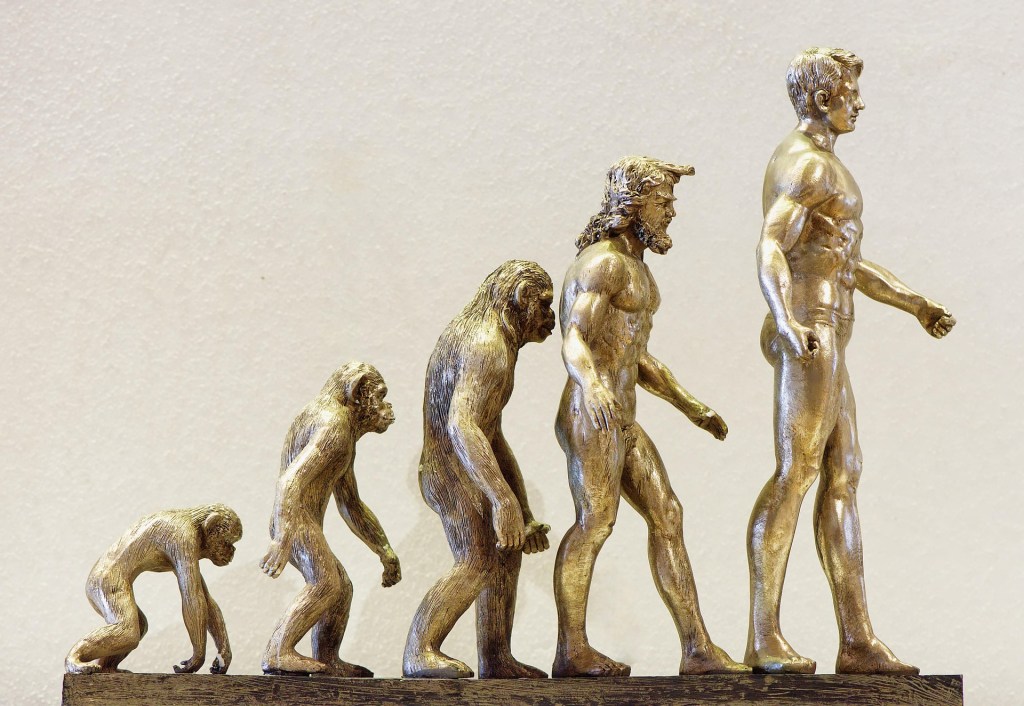
With today’s AI advancements, this is just a step back to understand the AI evolution over these many years.
1943–1956 : Early Concepts and Foundations
| 1943 | Warren McCulloch and Walter Pitts | Published ‘A Logical Calculus of the Ideas Immanent in Nervous Activity,’ proposing the first mathematical model of an artificial neuron. | https://en.wikipedia.org/wiki/Artificial_neuron |
| 1950 | Alan Turing | Published ‘Computing Machinery and Intelligence,’ introducing the Turing Test as a measure of machine intelligence. | https://plato.stanford.edu/entries/turing-test/ |
| 1955 | Allen Newell and Herbert Simon | Developed the ‘Logic Theorist,’ often considered the first AI program. | https://en.wikipedia.org/wiki/Logic_Theorist |
1956–1970 : The Birth of AI as a Discipline
| 1956 | The Dartmouth Summer Research Project on Artificial Intelligence | marks the formal birth of AI as a field; John McCarthy coins the term ‘artificial intelligence.’ | https://250.dartmouth.edu/highlights/artificial-intelligence-coined… |
| 1958 | John McCarthy | invents Lisp, the programming language that dominated AI research for decades. | https://en.wikipedia.org/wiki/Lisp_(programming_language) |
| 1965 | Joseph Weizenbaum at MIT | develops ELIZA, an early natural language processing program that simulated a Rogerian psychotherapist. | https://en.wikipedia.org/wiki/ELIZA |
| 1969 | Shakey the robot | the first mobile robot capable of reasoning about its actions, is developed at the Stanford Research Institute. | https://www.sri.com/hoi/shakey-the-robot/ |
1970s–1980s : Early AI Applications and Expert Systems
| 1973 | MYCIN | an expert system for diagnosing bacterial infections, is developed at Stanford. | https://en.wikipedia.org/wiki/Mycin |
| 1974 | Marvin Minsky and Seymour Papert | publish ‘Perceptrons,’ criticizing neural network research and contributing to the first AI winter. | https://en.wikipedia.org/wiki/Perceptrons_(book) |
| 1980 | Japan | launches the Fifth Generation Computer Systems project, a massive national investment in AI. | https://en.wikipedia.org/wiki/Fifth_Generation_Computer_Systems |
| 1985 | The expert-systems industry | hits an estimated billion-dollar peak; rule-based commercial systems proliferate. | https://en.wikipedia.org/wiki/Expert_system |
| 1986 | Rumelhart, Hinton, and Williams | publish their backpropagation paper, reigniting neural network research. | https://www.nature.com/articles/323533a0 |
1980s–1990s : AI Winter and Renewed Interest
| Late 1980s | Funding for AI research | collapses as expert systems fail to scale; this period becomes known as the ‘AI winter.’ | https://en.wikipedia.org/wiki/AI_winter |
| 1987 | Connectionism and neural networks | experience a revival driven by improved learning algorithms. | https://en.wikipedia.org/wiki/Connectionism |
| 1989 | Yann LeCun | applies convolutional neural networks (LeNet) to handwritten digit recognition for postal code reading. | https://en.wikipedia.org/wiki/LeNet |
| 1995 | Tin Kam Ho | introduces the Random Forest method, which becomes a workhorse algorithm for tabular ML. | https://en.wikipedia.org/wiki/Random_forest |
Late 1990s–Early 2000s : Machine Learning and the Internet Era
| 1997 | IBM’s Deep Blue | defeats reigning world chess champion Garry Kasparov. | https://www.ibm.com/history/deep-blue |
| Late 1990s | Statistical machine learning | becomes the dominant approach in AI research, displacing symbolic AI. | https://en.wikipedia.org/wiki/Machine_learning#History_and_relation… |
| 2002 | iRobot | launches Roomba, the first commercially successful autonomous home robot. | https://en.wikipedia.org/wiki/Roomba |
| 2006 | Geoffrey Hinton’s paper on deep belief networks | helps revive and popularize the term ‘deep learning.’ | https://en.wikipedia.org/wiki/Deep_learning#History |
| 2009 | Fei-Fei Li’s team at Princeton/Stanford | releases ImageNet, the dataset that would catalyze the deep learning revolution. | https://www.image-net.org/about.php |
2010s : Deep Learning Breakthrough
| 2011 | IBM’s Watson | defeats champions on Jeopardy!, a milestone for natural language question-answering. | https://www.ibm.com/history/watson-jeopardy |
| 2012 | AlexNet (Krizhevsky, Sutskever, Hinton) | wins the ImageNet competition by a wide margin, igniting the deep learning era. | https://en.wikipedia.org/wiki/AlexNet |
| 2014 | Ian Goodfellow | proposes Generative Adversarial Networks (GANs), enabling realistic image synthesis. | https://arxiv.org/abs/1406.2661 |
| 2015 | OpenAI | is founded as a research lab focused on building safe and beneficial AGI. | https://openai.com/our-structure/ |
| 2016 | DeepMind’s AlphaGo | defeats world Go champion Lee Sedol 4–1 in a landmark match. | https://deepmind.google/discover/blog/alphago-mastering-the-ancient… |
| 2017 | Vaswani et al. | publish ‘Attention Is All You Need,’ introducing the Transformer architecture that powers nearly every modern LLM. | https://arxiv.org/abs/1706.03762 |
| 2018 | Google and OpenAI | release BERT and GPT-1, demonstrating the power of large-scale pretraining on unlabeled text. | https://arxiv.org/abs/1810.04805 |
| 2019 | OpenAI | releases GPT-2, generating coherent long-form text and prompting debate about responsible release of AI models. | https://openai.com/index/better-language-models/ |
2020–2022 : Scaling and Generative AI Goes Public
| 2020 | OpenAI | releases GPT-3 (175B parameters); the model exhibits emergent few-shot learning capabilities. | https://arxiv.org/abs/2005.14165 |
| 2021 | GitHub | launches Copilot, bringing AI-assisted coding to millions of developers. | https://github.blog/news-insights/product-news/introducing-github-c… |
| 2021 | OpenAI | releases DALL·E and CLIP, demonstrating text-to-image generation and multimodal understanding. | https://openai.com/index/dall-e/ |
| 2022 | Stable Diffusion (Stability AI) and Midjourney | launch, making high-quality text-to-image generation widely accessible. | https://en.wikipedia.org/wiki/Stable_Diffusion |
| Nov 2022 | OpenAI | launches ChatGPT, reaching 100 million users within two months — the fastest-adopted consumer app in history at the time. | https://openai.com/index/chatgpt/ |
2023–2024 : The Generative AI Boom and Regulatory Response
| Mar 2023 | OpenAI | releases GPT-4 with multimodal capabilities (text and images). | https://openai.com/index/gpt-4-research/ |
| Mar 2023 | Anthropic and Google | launch Claude and Bard (later rebranded to Gemini). | https://www.anthropic.com/news/introducing-claude |
| Oct 2023 | The White House | issues the Executive Order on Safe, Secure, and Trustworthy Development and Use of AI. | https://bidenwhitehouse.archives.gov/briefing-room/presidential-act… |
| Dec 2023 | EU institutions | reach political agreement on the EU AI Act, the world’s first comprehensive AI law. | https://artificialintelligenceact.eu/ |
| Dec 2023 | ISO/IEC 42001 | is published — the first international standard for AI management systems. | https://www.iso.org/standard/42001 |
| 2024 | Multimodal frontier models | become mainstream: GPT-4o, Claude 3 family, Gemini 1.5, Llama 3. | https://openai.com/index/hello-gpt-4o/ |
| Jul 2024 | NIST | publishes the AI 600-1 Generative AI Profile of the AI Risk Management Framework. | https://nvlpubs.nist.gov/nistpubs/ai/NIST.AI.600-1.pdf |
| Dec 2024 | The EU Cyber Resilience Act (CRA) | enters into force, with phased compliance obligations beginning in 2026. | https://digital-strategy.ec.europa.eu/en/policies/cyber-resilience-act |
2025–2026 : Reasoning, Agents, and AI-Native Security
| Early 2025 | Dedicated ‘reasoning models’ | emerge (OpenAI o-series, Claude extended-thinking modes), shifting focus from raw scale to chain-of-thought capability. | https://openai.com/index/learning-to-reason-with-llms/ |
| Aug 2025 | OpenAI | releases GPT-5, unifying reasoning and general-purpose capabilities in a single tiered model family. | https://openai.com/gpt-5/ |
| 2025 | Agentic AI | becomes a major industry theme: Anthropic, OpenAI, and Google ship ‘computer use’ and tool-using agent capabilities. | https://www.anthropic.com/news/3-5-models-and-computer-use |
| Apr 2026 | ISC2 | publishes the Exam Guidance for Artificial Intelligence, mapping AI security concepts across all nine ISC2 certifications. | https://www.isc2.org/Insights/2026/04/ISC2-Publishes-Exam-Guidance-AI |
| Apr 7 2026 | Anthropic | announces Claude Mythos Preview, the first AI model to demonstrate autonomous discovery and exploitation of zero-day vulnerabilities at scale. | https://red.anthropic.com/2026/mythos-preview/ |
| Apr 2026 | Anthropic | launches Project Glasswing — giving defenders priority access to Mythos-class capabilities for finding and fixing flaws in critical software. | https://www.anthropic.com/glasswing |
| Sep 11 2026 (upcoming) | EU CRA vulnerability and severe incident reporting obligations | begin for manufacturers of products with digital elements. | https://digital-strategy.ec.europa.eu/en/policies/cyber-resilience-act |
Conclusion :
AI developments has been happening not so steadily but surely with waves of optimism, negligence, sudden breakthroughs, For most of this history, the central question was can the machine do it? With capabilities like Claude Mythos Preview, the question has shifted to how do we govern what it can already do? This shines light of the regulatory acts surrounding these AI models EU AI Act, the Cyber Resilience Act, NIST’s framework, ISO 42001 now runs in parallel with the technical one, not in the background. AI is no longer just a tool to defend, but a force reshaping the entire threat landscape.
“The milestones ahead won’t only be measured in benchmarks, but in how responsibly we deploy what we’ve built.“
Image copyrights : https://pixabay.com/

